Compare pathway lights for architectural landscapes and durability metrics

Modern site planning demands rigorous evaluation of pedestrian illumination infrastructure. Ground-level fixtures define safety boundaries and establish aesthetic cohesion across diverse municipal and residential developments. Compare pathway lights. Navigating disparate voltage architectures, lumen outputs, and thermal tolerances requires systematic analysis rather than intuition. This reference manual explores every dimension of exterior illumination systems to provide a definitive blueprint for designers and property managers.
Exterior lighting projects frequently fail because stakeholders rely on superficial visual appeal rather than technical metrics. Environmental stressors destroy substandard hardware within single weather cycles. Proper planning integrates electrical safety codes with landscape geometry. Subsequent sections unpack the structural frameworks necessary for robust installation decisions.
Compare pathway lights
When professionals compare pathway lights, technical metrics dictate operational success far more than initial aesthetic impressions. Exterior illumination involves complex interactions between electrical wiring gauges, driver efficiencies, diode degradation rates, and housing metallurgy. Oversimplification leads to premature hardware failure, uneven light distribution, and excessive energy consumption.
Many buyers mistakenly treat ground fixtures as decorative ornaments rather than engineered electrical components. Environmental exposure tests reveal stark differences between marine-grade alloys and stamped aluminum housings. Evaluating performance requires examining beam spreads, color rendering indexes, and ingress protection ratings simultaneously.
Deep Contextual Background
Exterior illumination has evolved from high-draw incandescent bulbs to highly efficient solid-state lighting. Early systems relied on heavy magnetic transformers and fragile filaments that fractured under thermal stress. Transitioning to light-emitting diodes reduced power consumption dramatically while introducing new thermal management challenges.
Early solid-state fixtures suffered from rapid lumen depreciation due to trapped heat inside sealed enclosures. Modern engineering addresses this through cast-aluminum heatsinks and remote drivers. Regulatory shifts toward dark-sky compliance further transformed optical design, pushing manufacturers to project light downward rather than outward. Understanding this technological trajectory prevents costly investments in obsolete fixture topologies.
Conceptual Frameworks and Mental Models
Photometric Distribution Models
Lighting designers rely on spatial distribution curves to understand how photons travel across walking surfaces. Illumination falls into distinct categories including symmetric, asymmetric, and forward-throw patterns. Selecting the correct pattern prevents dark zones between distant fixtures.
Thermal Dissipation Frameworks
Heat kills electronic components faster than electrical surges. Solid-state diodes require continuous thermal paths to transfer heat away from the semiconductor junction. Fixtures are engineered with finned aluminum bodies to dissipate thermal energy into ambient air.
Voltage Drop Calculations
Long cable runs experience resistance losses that dim distant fixtures. Engineers calculate wire gauge thickness against total wattage draw to maintain uniform voltage across every terminal. Ignoring voltage drop results in uneven illumination gradients.
Key Categories and Variations
Exterior illumination hardware is grouped into distinct operational classes. Each category presents specific installation demands and maintenance profiles.
Low-Voltage Systems
Operating at twelve volts, these setups utilize step-down transformers to enhance user safety during garden maintenance. They accommodate flexible layout adjustments without requiring deep electrical trenching.
Line-Voltage Systems
Running on standard household voltage, these fixtures eliminate transformer losses over extended distances. Conduits must be buried at code-specified depths to prevent accidental severance by shovels.
Solar-Integrated Units
Autonomous fixtures gather daylight through onboard photovoltaic panels to charge internal lithium batteries. They suit remote locations lacking grid access, though performance drops during prolonged overcast periods.
Bollard Luminaires
Tall vertical posts project widespread illumination across wide walkways and public plazas. Their structural rigidity withstands accidental impacts from maintenance vehicles.
Surface-Step Fixtures
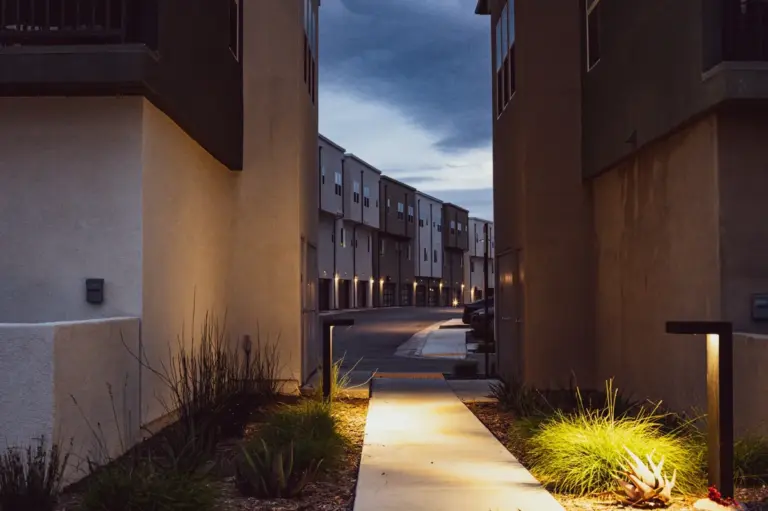
Embedded directly into retaining walls or stair risers, these units eliminate vertical trip hazards. They direct light strictly downward onto walking surfaces.
| Category | Typical Voltage | Primary Advantage | Primary Limitation |
| Low-Voltage | 12V / 24V | Safe installation, easy relocation | Transformer voltage drop limits run length |
| Line-Voltage | 120V / 277V | Long cable runs, high lumen output | Rigid burial depth codes, complex wiring |
| Solar-Integrated | DC Battery | Zero grid trenching costs | Weather-dependent charging reliability |
| Bollard Posts | Varies | Wide spatial coverage | High profile vulnerable to vehicle impact |
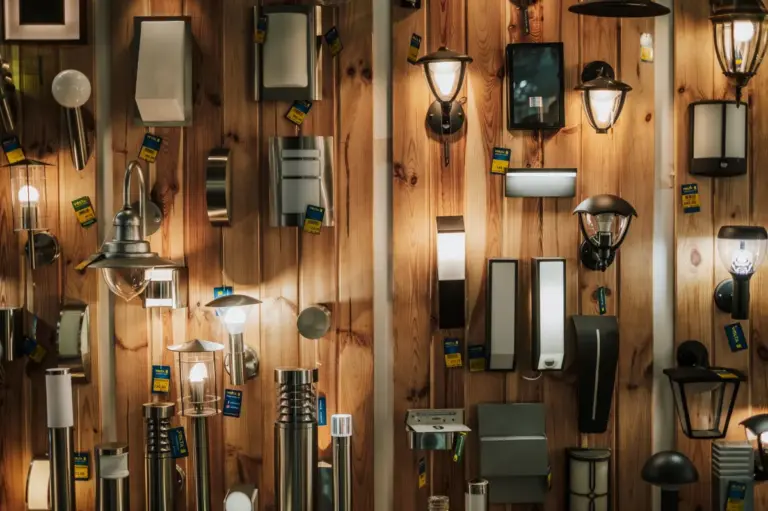
Property owners who compare pathway lights must evaluate optical distributions against site geometry before purchasing hardware. Narrow walkways demand asymmetric beam spreads to minimize light spill into adjacent flower beds. Wide public thoroughfares require bollard heights that prevent pedestrian glare.
Detailed Real-World Scenarios
Coastal Environments
Salt spray accelerates galvanic corrosion on dissimilar metal fasteners. Stainless steel components degrade rapidly unless coated with protective fluoropolymer finishes. Specifiers must choose marine-grade bronze or passivated 316 stainless steel housings.
Heavy Snowfall Zones
Sub-zero temperatures freeze ground moisture, causing soil heave that shears rigid conduit lines. Fixtures are installed with flexible mounting stakes that accommodate seasonal ground shifts. Snow accumulators also block low-profile solar panels completely.
Dense Urban Parks
Vandalism remains a constant threat in public municipal spaces. Heavy cast-iron or thick polycarbonate lenses protect internal diodes from impact damage. Tamper-resistant Torx fasteners deter unauthorized hardware removal.
Historic Preservation Sites
Visible wiring channels violate strict architectural preservation guidelines. Installers route low-voltage cabling beneath flagstone joints without disturbing historical sub-base layers. Compact surface fixtures blend seamlessly into antique stonework.
Planning, Cost, and Resource Dynamics
Financial investments extend far beyond initial hardware acquisition costs. Labor expenses for trenching, conduit laying, and transformer mounting often exceed equipment budgets threefold. Trenching through established landscaping requires careful hand-digging around mature tree root systems.
| Expense Category | Cost Range (USD) | Resource Impact |
| Hardware Acquisition | $30 – $300 per unit | Material durability varies by alloy quality |
| Installation Labor | $1,500 – $5,000 total | Trenching depth and soil hardness dictate speed |
| Power Infrastructure | $500 – $2,000 total | Transformer capacity and wiring gauge requirements |
| Maintenance Reserves | 10% – 15% annually | Driver replacements and lens cleaning schedules |
Budgets expand when stakeholders compare pathway lights across multiple architectural zones simultaneously. Bulk purchasing discounts offset higher initial outlays for commercial-grade metallurgy. Neglecting future maintenance budgets leads to premature system abandonment when drivers fail.
Tools, Strategies, and Support Systems Compare pathway lights
Digital Photometric Simulators
Software programs model light levels across virtual landscapes before physical installation begins. Designers identify dark spots and glare vectors prior to ordering equipment.
Digital Multimeters
Technicians measure exact operating voltages at the furthest fixture terminals. Voltage drops are diagnosed quickly before component overheating occurs.
Cable Pulling Lubricants
Friction reduction agents protect outer wire insulation during long conduit pulls. Installers prevent jacket abrasions that cause future ground faults.
Waterproof Gel Splices
Silicone-filled wire connectors seal copper connections against subterranean moisture intrusion. Corrosion is halted before resistance builds up within the circuit.
Risk Landscape and Failure Modes
Water Ingress
Subterranean irrigation systems flood junction boxes if gaskets fail. Moisture enters optical chambers, shorting LED drivers and fogging protective lenses.
Capacitor Degradation
Electrolytic capacitors inside power supplies degrade prematurely under extreme summer heat. Power fluctuations shorten semiconductor lifespan significantly.
Root Infiltration
Aggressive tree roots wrap around buried conduits, crushing plastic pipes and shearing internal wires. Installers route cables away from fast-growing canopy zones.
Governance, Maintenance, and Long-Term Adaptation
Operational longevity demands structured maintenance protocols. Facility managers compare pathway lights periodically to assess lumen depreciation and lens discoloration. Scheduled cleaning removes stubborn mineral deposits left by automated sprinkler overspray.
Drivers exhibit failure signatures long before complete shutdown occurs. Technicians review seasonal power logs to identify failing transformers. Replacing degraded components proactively prevents cascading circuit failures during winter storms.
Measurement, Tracking, and Evaluation Compare pathway lights
Quantifying lighting performance requires calibrated instruments and documented metrics. Handheld lux meters measure foot-candle levels at designated walking intervals. Measurements are cross-referenced against safety standards for pedestrian pathways.
Energy consumption logs track total wattage draw over monthly billing cycles. Discrepancies indicate short circuits or failing power supplies. Maintaining comprehensive equipment ledgers streamlines future upgrade cycles.
Common Misconceptions and Oversimplifications
Lumens Equal Visual Brightness
Raw lumen output fails to account for optical efficiency and glare control. Poorly designed reflectors scatter light wastefully into the night sky.
Solar Units Require Zero Maintenance
Dust and pollen accumulation on photovoltaic panels reduces charging efficiency over time. Battery storage capacities degrade after several annual thermal cycles.
All Housings Withstand Foot Traffic
Decorative garden stakes bend easily under accidental pedestrian weight. Heavy structural bollards are required wherever foot traffic crosses fixture footprints.
Skeptics compare pathway lights superficially without reviewing voltage drop calculations or thermal ratings. This oversight leads to frequent replacements and inflated long-term operational expenditures.
Ethical, Practical, and Contextual Considerations
Responsible lighting design balances human safety against ecological preservation. Excessive light pollution disrupts nocturnal wildlife navigation and human circadian rhythms. Fixtures are specified with full cutoff shielding to direct photons exclusively downward.
Color temperature selection impacts nocturnal insect populations significantly. High-kelvin blue-spectrum LEDs attract flying insects away from natural habitats. Warm-spectrum sources minimize ecological disruption while maintaining comfortable pedestrian visibility.
Conclusion
Selecting exterior illumination requires deep technical analysis and careful environmental evaluation. Engineers compare pathway lights through rigorous photometric examination rather than emotional aesthetic impulse. Balancing durability, electrical efficiency, and optical precision ensures long-term infrastructure reliability. Quality illumination protects pedestrians while enhancing architectural landscapes for decades.