How to manage timer errors Lighting: A technical analysis of architectural synchronization
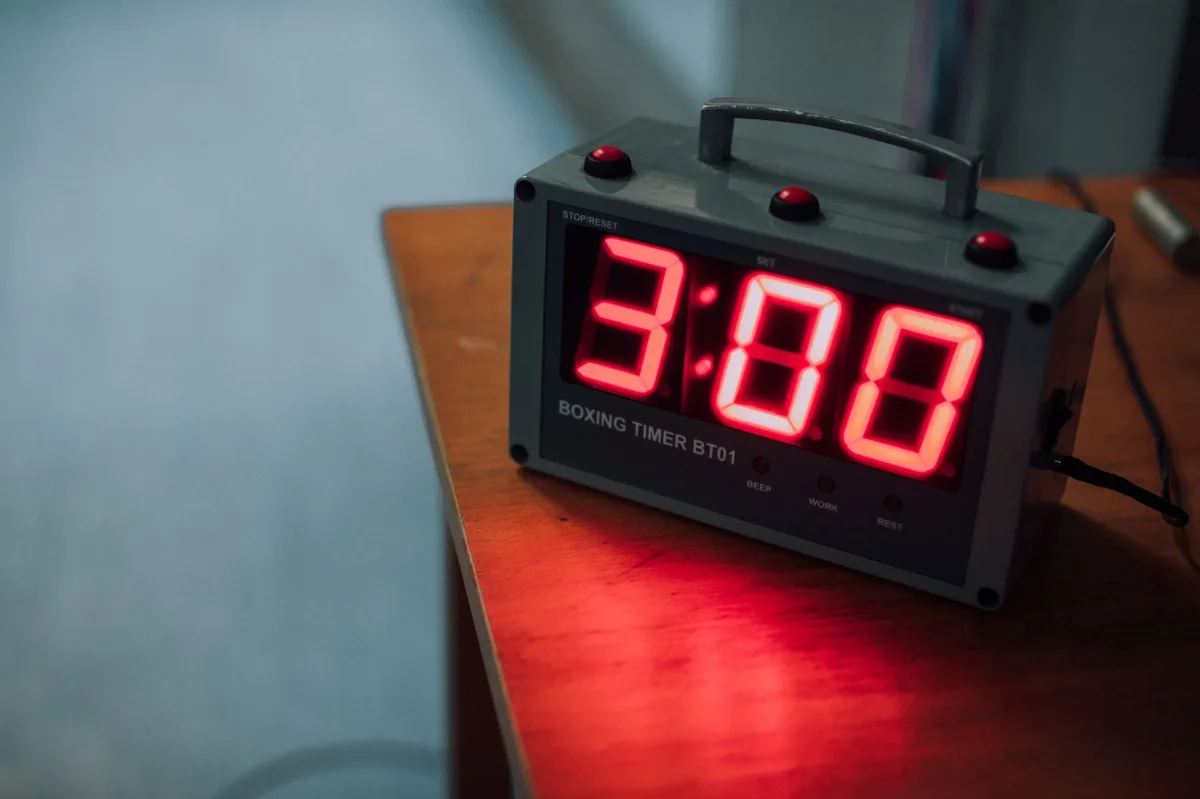
Modern architectural and commercial illumination infrastructure relies on precise scheduling to optimize energy consumption and aesthetic presentation. Advanced lighting control systems utilize internal microcontrollers and real-time clock modules to automate dimming schedules, color tuning, and zone transitions. How to manage timer errors Lighting. When these internal clocks drift or malfunction, scheduling anomalies disrupt facility operations and cause unexpected lighting states. Resolving these temporal discrepancies requires rigorous technical oversight rather than casual resets.
Illumination automation networks operate across diverse physical environments subject to thermal extremes, electrical noise, and aging components. Mechanical timers and electronic crystal oscillators degrade gradually over years of continuous operation, introducing measurable temporal drift. If left uncorrected, accumulated time errors cause exterior security lights to activate prematurely or architectural displays to misalign with sunset cycles. Facility managers must implement structured diagnostic and calibration workflows to maintain reliable automation performance.
Systematic temporal maintenance transforms erratic lighting behavior into predictable, synchronized operation. Technicians analyze root causes ranging from battery backup failures on real-time clock chips to software protocol desynchronization. The following analysis explores architectural frameworks, diagnostic methodologies, and long-term preservation practices for automated illumination networks. Implementing these measures ensures extended operational lifespan across complex commercial deployments.
Understanding “how to manage timer errors Lighting”
Mastering how to manage timer errors Lighting installations demands separating physical hardware limitations from software programming flaws. Ambient temperature fluctuations alter the piezoelectric properties of quartz crystal resonators inside lighting controllers, causing oscillation frequencies to shift unpredictably. When multiple independent lighting zones attempt synchronized macro-events without reference corrections, cumulative time divergence disrupts theatrical or security sequences. Software scheduling routines further complicate temporal fidelity by introducing variable interrupt latency and priority inversion bottlenecks during heavy data polling.
The Physics of Oscillator Drift
Quartz crystal oscillators serve as the primary heartbeat for digital lighting controllers, yet their resonance frequency remains inherently unstable under severe thermal stress. A standard uncompensated crystal exhibits parts-per-million deviation that compounds over extended operational periods. Without temperature compensation circuitry or periodic network time synchronization, digital clocks drift significantly from standard solar or atomic epochs, throwing automated astronomical schedules entirely out of alignment.
Software Scheduling Bottlenecks
Lighting control software allocates central processing unit cycles based on priority queues and background interrupt request lines. High-priority network traffic frequently preempts routine timer interrupts, delaying time-critical fixture command execution. Programmers must account for jitter and latency when designing responsive dimming and color-tuning loops. Ignoring these software delays compromises the deterministic nature of complex architectural installations.
Deep Contextual Background
Historical Evolution of Lighting Automation
Early commercial illumination relied on crude electromechanical dial timers and synchronous motor clocks driven directly by power-line frequency. The introduction of solid-state microcontrollers and quartz crystal oscillators miniaturized timekeeping, enabling sophisticated programmable dimming profiles. As architectural lighting expanded into multi-zone DALI and DMX network architectures, temporal tolerances shrank from minutes to milliseconds. This technological shift forced facility engineers to adopt sophisticated network time synchronization protocols.
Transition to Networked Lighting Control
Standalone lighting panels eventually gave way to interconnected Internet of Things infrastructures operating across wide area networks. Local quartz oscillators naturally diverged from one another, necessitating algorithmic synchronization protocols. Network time protocols emerged to distribute accurate reference timestamps across disparate controller hardware nodes. Contemporary illumination infrastructure demands continuous adjustment mechanisms to maintain sub-second alignment among stadium floods, facade spotlights, and interior accent arrays.
Conceptual Frameworks and Mental Models
The Temporal Drift Triangle
Temporal accuracy in lighting systems depends on three interconnected variables: oscillator stability, thermal variation, and reference synchronization frequency. Altering any single factor shifts the overall error boundary of the automation controller. Visualizing timekeeping through this triangular model helps facility engineers pinpoint whether lighting schedule failures stem from hardware degradation or software update intervals.
The Bounded Jitter Framework
Every sampled lighting control interval experiences micro-variations known as scheduling jitter. Rather than expecting absolute temporal perfection, engineers establish acceptable upper and lower bound thresholds for command execution variance. Designing control loops within these statistical boundaries prevents unexpected lighting flicker and communication timeouts across large fixture arrays.
The Compensatory Feedback Loop
Maintaining long-term temporal accuracy in large facilities requires closed-loop feedback mechanisms that compare local controller time against trusted external internet references. Regular error correction offsets natural drift before accumulated discrepancies trigger visible scheduling faults. This proactive model replaces reactive manual clock adjustments with automated background calibration.
Key Categories or Variations
Major Timer Discrepancy Classifications
Temporal anomalies in lighting automation manifest across distinct hardware and software domains, each presenting unique behavioral profiles.
-
Hardware Crystal Drift: Gradual time deviation caused by aging or thermal stress on physical quartz resonators inside controllers.
-
Interrupt Latency Jitter: Variable delays in command execution triggered by competing high-priority background network tasks.
-
Network Propagation Delay: Asymmetric packet transit times disrupting distributed DMX or DALI synchronization algorithms.
-
RTC Battery Depletion: Loss of real-time clock backup power causing controllers to reset to default epochs upon power loss.
-
Asynchronous Clock Domains: Timing mismatches occurring when data transfers between independent controller subnets.
-
Power-Supply Voltage Sag: Frequency instability induced by voltage drops across integrated circuit logic pins.
-
Software Polling Inefficiencies: Inaccurate interval tracking caused by blocking loops rather than hardware interrupts.
Comparison Matrix of Mitigation Strategies
| Strategy | Primary Mechanism | Primary Limitation | Ideal Environment |
| Temperature-Compensated Crystals | Internal thermal correction | Higher unit acquisition cost | Outdoor architectural poles |
| Network Time Protocol | Periodic reference polling | Vulnerable to network latency | Commercial office hubs |
| Hardware Watchdog Reset | Automatic recovery on freeze | Does not correct root drift | Embedded panel controllers |
| Real-Time Clock Battery Swap | Preventative power retention | Requires manual physical access | Standalone theatrical racks |
Decision Logic for Synchronization Selection
System designers evaluate ambient environmental extremes, network reliability, and processing overhead before selecting correction protocols. High-reliability outdoor illumination grids mandate local hardware compensation to survive network isolation during storms. Conversely, cloud-hosted smart building hubs rely primarily on frequent software network synchronization. Matching mitigation techniques to operational constraints prevents chronic desynchronization across lighting zones.
Detailed Real-World Scenarios How to manage timer errors Lighting
Municipal Streetlight Astronomical Scheduling
A municipal public works department discovers that city streetlights activate twenty minutes after sunset during winter months. Diagnostic analysis reveals that uncompensated controller crystals drifted significantly over six months of seasonal temperature swings. Upgrading firmware to poll internet time servers daily resolves the astronomical schedule discrepancy permanently.
Theatrical Stage Lighting Cue Synchronization
A performing arts center experiences microsecond timing drift between automated moving head fixtures and master audio cues. Network routing jitter introduces slight delays that disrupt tight visual synchronization during live productions. Implementing dedicated Ethernet lighting protocols with hardware-level timestamping eliminates the performance latency.
Commercial Façade Architectural Display
A high-rise office building features a dynamic LED facade program that fails to transition correctly at midnight. Facility managers discover that dead internal coin-cell batteries caused controllers to reset their epochs whenever brief power brownouts occurred. Replacing the backup batteries and establishing local network time servers restores reliable multi-zone coordination.
Greenhouse Photoperiod Control Arrays
An agricultural greenhouse utilizes automated supplemental lighting to manage plant photoperiods strictly. Controller clock slippage extends dark-period cycles unexpectedly, stunting crop development. Technicians install industrial-grade real-time clock modules equipped with automatic temperature compensation to protect the sensitive crop schedules.
Planning, Cost, and Resource Dynamics How to manage timer errors Lighting
Direct Versus Indirect Financial Outlays
Upfront investments in high-precision controller hardware and redundant timing modules exceed standard procurement budgets significantly. However, recurring operational troubleshooting labor and premature equipment replacement costs accumulate heavy financial penalties over time. Factoring in total lifecycle expenses demonstrates clear economic advantages for robust initial synchronization designs.
Financial Range-Based Allocation Matrix
| Project Phase | Estimated Cost Range | Primary Focus | Variance Factor |
| Controller Procurement | $800 to $3,500 | Hardware grade and backup power | Environmental exposure |
| Software Integration | $1,200 to $5,000 | Synchronization daemon configuration | Network complexity |
| Ongoing Auditing | $300 to $1,500 annually | Calibration and drift monitoring | System scale |
Opportunity Cost Considerations
Understanding how to manage timer errors Lighting budgets effectively involves weighing upfront expenses against maintenance savings. Allocating financial reserves toward precise temporal infrastructure prevents catastrophic automation failures in high-profile installations. Project managers who prioritize minimal upfront costs over timing resilience invite expensive emergency troubleshooting sessions. Balancing capital distribution protects long-term operational integrity.
Tools, Strategies, and Support Systems
Essential Diagnostic Instruments
Detecting and resolving temporal discrepancies requires specialized hardware and software measurement tools.
-
High-Bandwidth Oscilloscopes: Measure controller clock signal duty cycle and physical frequency jitter directly.
-
Logic Analyzers: Capture multiple digital timing channels simultaneously to isolate interrupt latency.
-
Network Packet Analyzers: Inspect synchronization protocol traffic for transit delay anomalies across lighting networks.
-
Thermal Chambers: Test controller oscillator stability across extreme operating temperature ranges.
-
Spectrum Analyzers: Evaluate phase noise characteristics of high-frequency clock generators.
-
Jitter Metering Software: Quantify statistical variance in periodic lighting command execution loops.
-
Multimeter Testing Rigs: Verify real-time clock backup battery voltages under load conditions.
Operational Strategies
Implementing rigorous software design patterns reduces susceptibility to scheduling delays. Developers utilize priority ceiling protocols to eliminate priority inversion in real-time lighting control operating systems. Regular benchmarking ensures that critical lighting scene triggers execute within strict temporal bounds.
Risk Landscape and Failure Modes
Compounding Systemic Hazards
Unaddressed temporal drift in lighting networks compromises more than simple schedule accuracy. In multi-zone architectural displays, desynchronized controllers cause conflicting scene commands that overload branch circuits and trip breakers. These silent logic failures often evade standard pre-deployment testing phases. Recognizing how to manage timer errors Lighting arrays face prevents cascading hardware faults in commercial buildings.
Clock Skew Vulnerabilities
When distributed lighting nodes experience severe clock skew, automated security lighting protocols fail to coordinate with perimeter motion sensors. Authorized zones remain dark while unoccupied areas stay fully illuminated. Maintaining tight synchronization bounds preserves functional security integrity across commercial perimeters.
Governance, Maintenance, and Long-Term Adaptation
Audit Cycles and Review Protocols
Establishing structured calibration schedules ensures long-term system stability. Maintenance personnel audit clock drift logs quarterly against trusted network reference standards. Immediate investigation of anomalous drift rates prevents sudden scheduling failures across lighting zones.
Adaptation Strategies for Aging Hardware
Electronic components degrade gradually over years of continuous operation, altering baseline oscillation frequencies. System administrators update software calibration offsets periodically to compensate for component aging. This adaptive maintenance extends hardware lifespan without requiring premature controller replacements.
Measurement, Tracking, and Evaluation
Quantitative and Qualitative Metrics
Tracking temporal health relies on both measurable statistical data points and systemic error logs. Maintenance teams record clock offset values, jitter standard deviations, and synchronization failure frequencies. Analyzing these metrics highlights recurring weak points across specific controller deployments.
Documentation Frameworks
Maintaining meticulous configuration records aids long-term asset management. Technicians document specific oscillator part numbers, calibration offsets, and network time server hierarchies in a master registry. This comprehensive documentation supports compliance audits and simplifies future troubleshooting tasks.
Common Misconceptions and Oversimplifications How to manage timer errors Lighting
The Perfect Crystal Fallacy
Many specifiers assume that purchasing high-end quartz crystals eliminates all need for software synchronization in lighting hubs. In reality, thermal stress and aging guarantee gradual drift regardless of initial component quality. Continuous reference correction remains essential for long-term accuracy.
The Network Time Myth
Some engineers believe that running standard synchronization software solves all internal timing challenges instantly. Network congestion and variable routing latency introduce jitter that software alone cannot fully eliminate. Hardware-level timestamping is often required for high-precision theatrical applications.
The Instant Reset Illusion
A common belief holds that simply restarting a malfunctioning controller permanently fixes drift issues. Resets only clear current register states without addressing underlying thermal or hardware degradation causes.
The Infinite Resolution Misconception
Assuming that software can track arbitrary sub-microscopic time intervals ignores underlying hardware clock tick limitations. Programmers must respect physical timer frequency boundaries to prevent rounding errors. Learning how to manage timer errors Lighting installations require means respecting these fundamental hardware constraints.
Ethical, Practical, and Contextual Considerations
Energy Efficiency and Regulatory Compliance
Accurate lighting schedules underpin energy conservation mandates and strict building code compliance. Corrupted timestamps cause exterior illumination systems to operate during daylight hours, wasting electricity and violating local environmental ordinances. Ensuring precise temporal records upholds institutional sustainability commitments.
Conclusion
Maintaining precise temporal coordination across modern automated lighting infrastructure requires rigorous attention to hardware limitations and software scheduling. Knowing how to manage timer errors Lighting networks encounter safeguards system reliability, aesthetic integrity, and energy efficiency. Thorough planning, disciplined calibration, and robust synchronization protocols guarantee long-term operational success across all architectural lighting domains.